
This post will help you go from frustrated and out of sync with the metronome — to genuinely keeping a beat
Let me ask you something. Do you have a metronome? A little tick-tock one on the shelf, or an app gathering digital dust on your phone? And when you last tried to practise with it, did it feel like trying to pat your head and rub your stomach at the same time — while someone tapped an insistent, merciless beat right next to your ear?

If so, you are in very good company. I’ve taught hundreds of adult musicians, and the metronome is consistently one of the most complained-about tools in the practice room.
Students tell me it puts them off, throws them out, makes them feel worse rather than better. One student described it as ‘like being followed by a very disappointed teacher who never blinks.’
I understand completely. But here’s what I want you to know: the metronome isn’t difficult because you don’t have a rhythmical bone in your body, nor can you play better without it (that’s just an excuse that your subconscious mind dreams up to protect you).
It’s difficult because most people are introduced to it entirely the wrong way. They pick it up, set it going, and immediately try to read music and play their instrument at the same time. That’s like learning to drive on a motorway. No wonder it feels overwhelming.
In this series, I’m going to take you through exactly how to build your metronome skills from the ground up — in gentle, manageable stages that actually work. And by the end, you won’t just be tolerating the metronome. You’ll be genuinely grateful for it.
To start with, you will need a metronome; if you don’t have one, you can learn which one best suits your needs here.
Why the Metronome Matters More Than You Think
Before we dive into the how, let’s talk about the why — because when you understand what the metronome is actually doing for you, it stops feeling like a chore and starts feeling like a genuine ally.
Here’s a quick experiment. Count to ten — out loud, at a comfortable pace — then clap on eleven. Now, if I asked everyone reading this to do the same thing simultaneously, I can almost guarantee we’d all clap at slightly different moments.
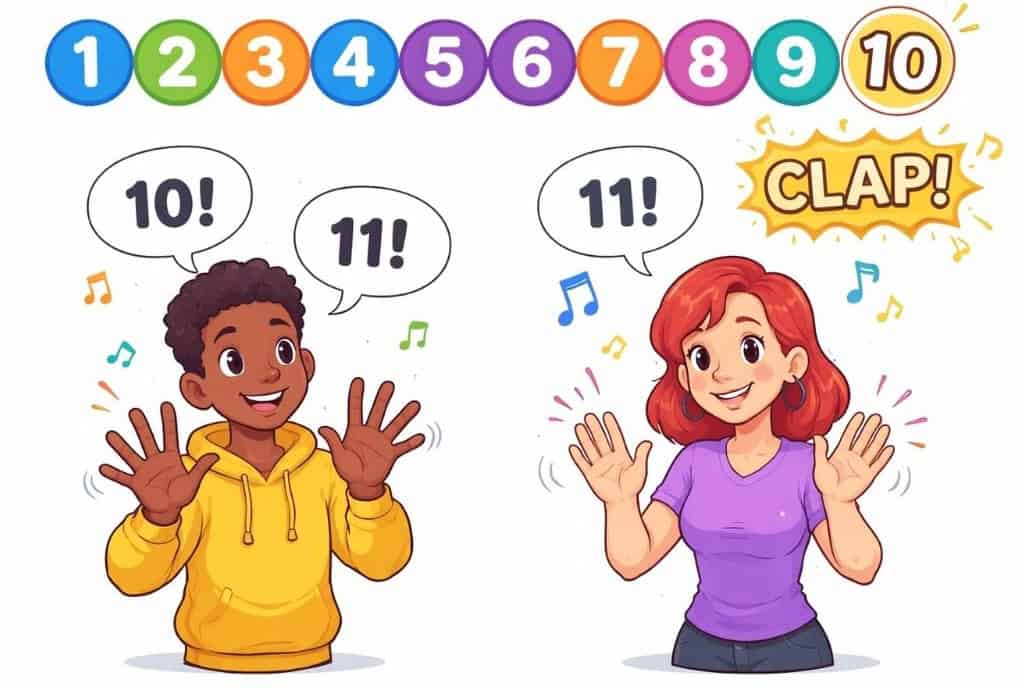
Why? Because without an external reference, we all have a slightly different internal sense of tempo. And crucially, when we practise music, most of us gradually speed up without realising it. We rush the easy bits and slow down at the more challenging bars. Yet it feels fine to us — but to a listener, it can feel unsettled.

The metronome solves this. It unifies the beats, keeps each one perfectly equal, and — perhaps most valuably — it slows us down. When we practise with a metronome at a truly steady, modest tempo, we learn music more accurately and more durably than when we race through it at full speed.
I promise you, slow practice with a metronome will get you to performance tempo faster than rushing ever will.
It also helps you develop what I call your inner ear — an internalised sense of pulse that stays steady even when the metronome is switched off. That’s the ultimate goal: not to be dependent on the click forever, but to use it as a training tool until your own internal beat is strong and reliable.
Choosing Your Metronome
There are three main types, and each has its merits. Below is a brief outline, but you can learn which is the best metronome to buy in this post.
The Three Types of Metronome
The Wind-Up (Tick-Tock) Metronome

My personal favourite for home practice. It winds up on the side and has a slider to set the beats per minute. The swinging pendulum gives you a visual reference alongside the auditory click — which is genuinely helpful, especially at first.
One lovely quirk: the wind-up mechanism lasts about 20 minutes before needing rewinding, which is actually a perfect built-in reminder to take a break.
The Digital Metronome

These are brilliant for their flexibility — they can subdivide beats into semiquavers, go slower and faster than a wind-up, and allow you to change the click sound. The downside is that subdivided beats (tick-tick-tick-tick-tick-tick-tick…) can become more confusing than helpful. My advice: keep it simple and use a single click per beat to start.
A Mobile Phone App
I use Metro Timer and it’s excellent — free, simple, with a flashing light option and a built-in timer. The big advantage of an app is that your phone is always with you, so there’s no excuse not to practise wherever you are.
The downside? Your phone is also full of emails, social media, and fifteen other distractions. My recommendation: get a wind-up one for home, and an app for everything else.
Getting started with a metronome
The single most important thing I want you to take from this article is this: don’t rush to put music in front of you. The metronome is a skill in itself, and it needs to be built in layers. Here’s the roadmap we’re going to follow.
- Get comfortable with the click alone: No instrument. No music. Just you and the metronome.
- Add a physical action: Clapping, tapping, or walking in time.
- Introduce your instrument — one note only: Still no music to read.
- Begin adding note changes: Random at first, then scales.
- Introduce music: Starting with the simplest possible pieces, one bar at a time.
- Level up: Minims (half notes), Semibreves (whole notes), rests, and eventually quavers (1/8th notes).
Stage One: Just Listen
Set your metronome to 60 beats per minute — one click per second, like the tick of a clock. Think about the second hand on a clock. Every single second is identical in length — not one of them rushes, not one of them lingers. The gap between one and two is exactly the same as the gap between four and five, and between nine and ten.
A metronome set to 60 beats per minute works in precisely the same way — one click per second, each interval a perfect mirror of the last.
Now think about what happens when we practise music without that reference. We hurry through the passages we find easy because our fingers know the way. We slow down — sometimes almost to a halt — on the difficult corners, because we need the extra time to think.

It feels completely natural while we’re doing it, because we’re responding to the music as we experience it in the moment. But to a listener, it can sound unsettled and annoying, like a clock whose second hand keeps stalling and then jumping forward.
The metronome holds up a mirror to all of that. It says: here is what equal actually sounds like. And once you’ve truly heard it — once that steadiness has settled into your body — you begin to develop the ability to recreate it yourself, from the inside, without any external help at all.
The screenshot below is from one of my Learn Music Together Members who puts the feeling into words perfectly.

Getting started
To begin with don’t pick up your instrument. Don’t read any music. Just sit quietly and listen.
Watch the pendulum if you have a wind-up metronome, or the flashing light on an app. Let the pulse settle into your body. You’re not doing anything yet — you’re simply becoming familiar with what a steady, unrelenting beat actually feels like.
This sounds trivially easy. It isn’t. Many people find even this surprisingly absorbing.
Spend two or three minutes on this. Just listen.
Stage Two: Say ‘T’ to the Beat
Still no instrument. Now, as each click sounds, say the syllable ‘T’ — just like the start of ‘tick’. Like this: T… T… T… T…
The goal is to land your T precisely on the click. Not just after it, not anticipating it — right on it. This requires more focus than it sounds, and that focus is exactly what we’re building.
If it takes you a few days to feel confident here, that is completely fine. Give yourself that time. There is no rush, and this foundation is genuinely important.
A Little Tip
If you find your Ts are drifting — landing late or early — try watching the pendulum or flashing light rather than just listening. The visual cue can help anchor you before the click arrives.
Stage Three: Clap
Once you feel genuinely confident saying T to the beat, add a clap. So you ‘ll say T and clap your hands at the same time to the metronome click. Then, when you’re ready, drop the T and just clap.
Now here’s something I’d love you to try: record yourself. Listen back and ask honestly — are your claps landing right on the click, or are they sliding just before or after? Most people are genuinely surprised by what they hear. You might discover you’re consistently early. Or that you’re spot-on for the first few beats and then start to drift. Both are useful pieces of information.
You can extend this practice in all sorts of ways. Stamp your foot instead of clapping. If you have a metronome app, take it on a walk and try stepping in time with each click. One step per click. It sounds simple. Try it.
Move to the beat

Stage Four: One Note on Your Instrument
Once you are able to move with the beat, it’s now time to pick up your instrument — but we’re keeping life extremely simple. Choose your favourite note. Your most comfortable, most reliable note. And play just that one note, once per click.
Say T to count yourself in before you start — you need to feel the pulse before you commit to it. Then join in. One note, every click.
Again, record yourself. Are your notes landing with the click, or around it? Are you rushing to stay ahead of it? Are you waiting for it to pass before you play? This is exactly the kind of awareness we’re trying to build.
When you feel solid at 60, move the metronome up to, say, 80 or 90. Then come back down to 60. Try it at 72. At 92. Vary the speed to keep your brain engaged and your ear flexible. Spend a minute or two on this at the start of every single practice session — even when you feel you’ve mastered it. This is your warm-up and your foundation.
That’s the end of Part One. In Part Two, we’ll move on to changing notes, reading simple music with the metronome, understanding half notes and whole notes, and some creative exercises that will genuinely transform the way you feel the beat. See you there.
Happy practising!
P.S. — How do you currently feel about the metronome? Love it, loathe it, or somewhere in between? Drop a comment and let me know — and if you’ve just tried the one-note exercise for the first time, I’d genuinely love to hear how it went.

Fiona, you are simply amazing incredible teacher, more incredible person I salute you and all you do and all you share with us you are an inspiration!
Thank you so much for your kind words — that really means a lot. I’m so glad you’re finding the content helpful and that it’s supporting your musical journey. Keep going, you’re doing great.